This autumn, NEVDA and the Elpako team participated in the Smart Country Convention (SCCON) 2024 in Berlin, where they showcased innovative digital signing solutions and explored digitalization trends across European markets. Business Development Manager Rokas Jašinskas shares key takeaways from the event, where technological trends, challenges and opportunities became clear.
Challenges in Germany and the Need for Digital Signing
The SCCON 2024 exhibition brought together public sector representatives, IT solution providers and policymakers to discuss the future of digitalization. NEVDA and Elpako presented Biometric Signing as an effective tool to simplify customer service processes. Rokas noted that IT infrastructure in Germany still faces significant challenges, from decentralized management to limited competition in digital signing solutions.
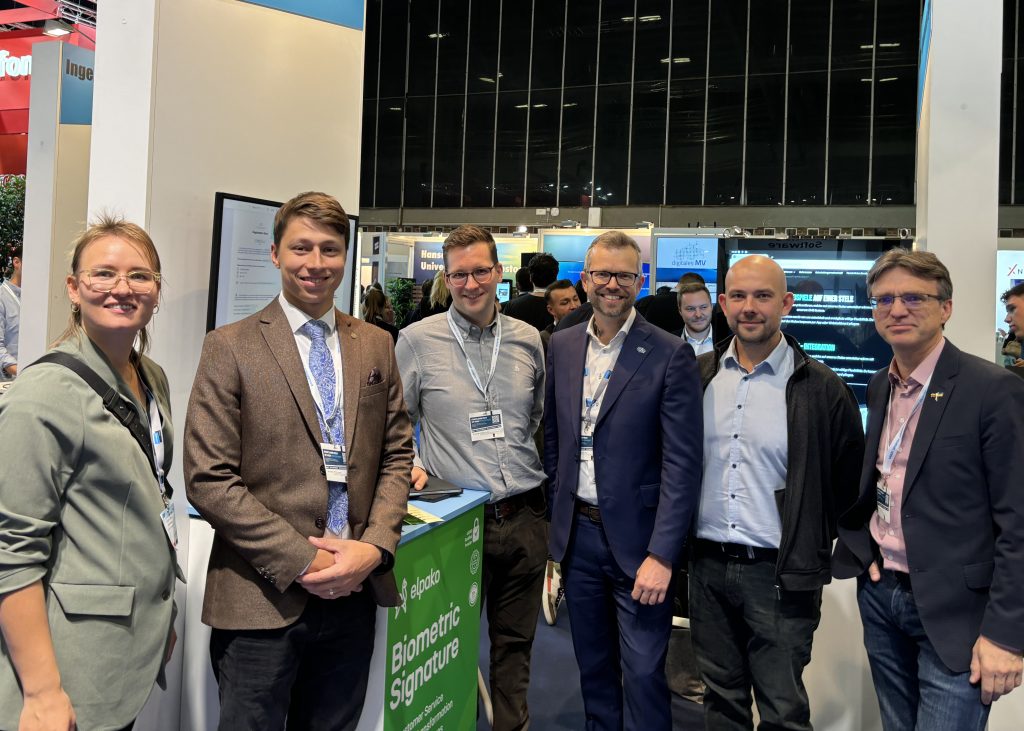
At the event, state officials emphasized the need for greater competition and flexibility in digital signing solutions. This creates opportunities for products like Elpako Biometric Signature, which is already successfully used in public sector institutions in Lithuania.
Although Germany maintains strong data protection regulation, the application of GDPR is consistent across all EU countries. Despite this, Germany, positioning itself as a GDPR leader, is only beginning to open up to smarter and more efficient data management solutions.

Future of Digital Services and Baltic Leadership
Latvia served as an SCCON partner country this year, strengthening the image of the Baltic States, including Lithuania, as digitalization leaders. According to Rokas, Lithuanian IT companies can offer intuitive, user‑friendly and cost‑effective solutions that may help address the growing shortage of IT professionals in Germany.
Representatives of the German public sector also discussed smart city development and funding opportunities. They stressed that digital solutions should not be complex. Small innovations, such as digital signing or 5G integration, can significantly improve citizen experience. This aligns with Elpako vision of creating solutions that modernize essential processes in a simple way.
New Opportunities and Sustainable Digitalization
The exhibition revealed that awareness of digital signature solutions is still limited, and many public sector institutions continue to rely on traditional, paper‑based signing. According to Rokas, the success of digital solutions depends on education and habit formation. He explained that faster digitalization requires not only technology but also active adoption and clear communication.
Artificial intelligence and automation were among the main topics of discussion. In Germany, there is growing interest in AI solutions that can ease bureaucratic processes, such as chatbots that help non‑German speakers complete forms.
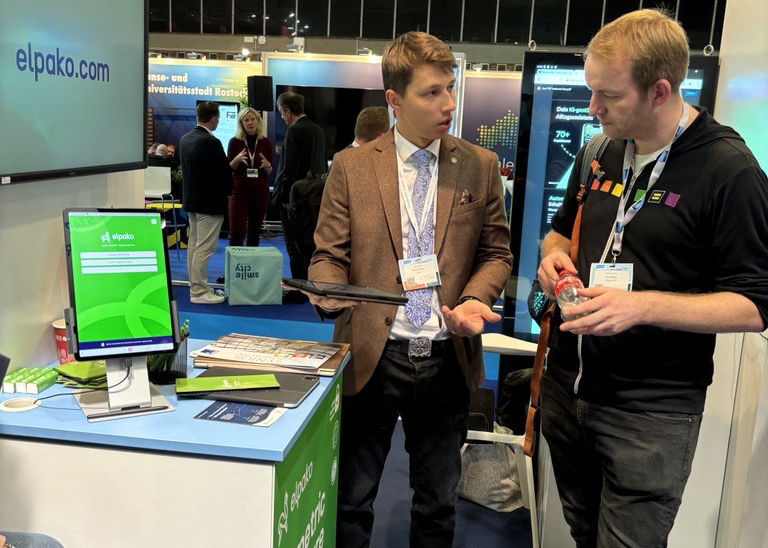
Elpako as Part of Future Solutions
Participation in the event confirmed that Elpako Biometric Signature can be a valuable tool in European public sector digitalization. The NEVDA team saw that digital signing is becoming an increasingly important topic, driven by data protection requirements and the need to optimize public sector operations.
“Our solutions are not just technology. They help institutions work more efficiently, reduce the use of paper and create more convenient services for citizens,” Rokas summarized.
NEVDA and Elpako’s participation in international exhibitions not only strengthened their market position but also provided valuable insights on how to further improve digitalization solutions. The next steps include even closer collaboration with international partners to ensure that our technologies meet the needs of both Lithuanian and global markets.