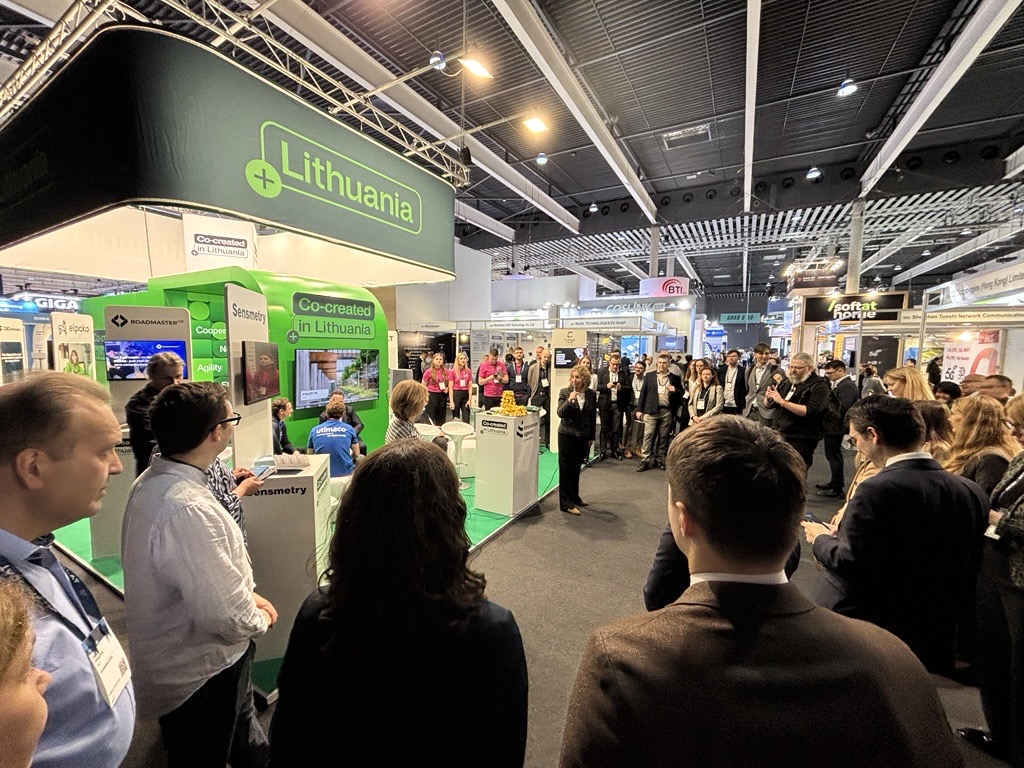
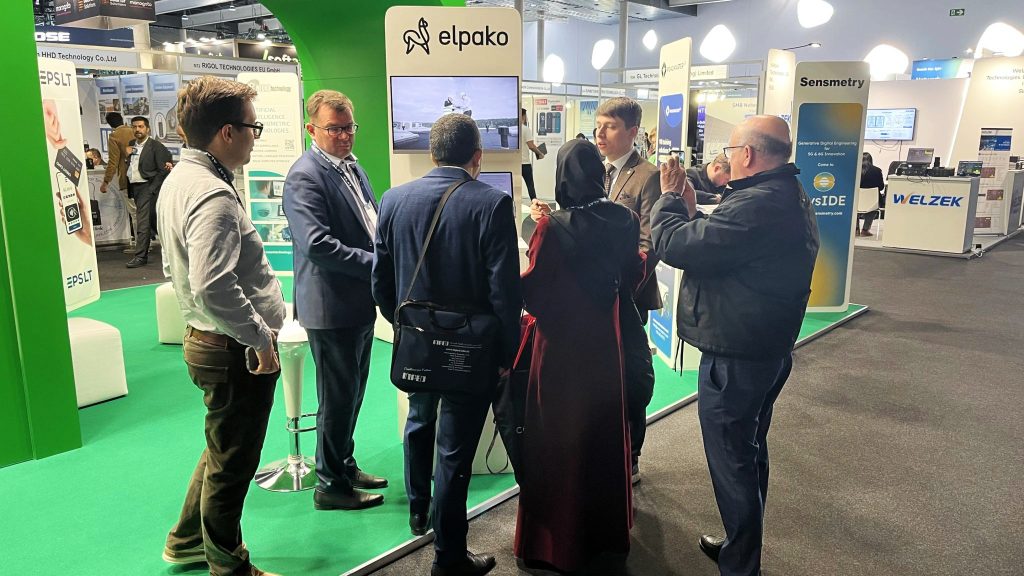
From March 3 to 6 this year, NEVDA and the Elpako team, together with the Innovation Agency, took part in the world’s largest technology event, Mobile World Congress (MWC25) in Barcelona. The exhibition was a unique opportunity not only to present the biometric signature solution to an international audience, but also to observe the latest market trends up close. Business Development Manager Rokas Jašinskas shares key insights from the event, which highlighted how artificial intelligence (AI), 5G and digital identification are shaping the future of technology.
Technology Directions: AI, 5G and Digital Identification
MWC25 clearly showed that three main technological directions will dominate in the coming years:
- 5G networks are expanding opportunities for faster and more reliable connectivity, which is essential for both smart devices and cloud services.
- Artificial intelligence is becoming an integral part of business digitalization, from chatbots to advanced data analytics tools.
- Digital identification is rapidly evolving. With the implementation of the eIDAS 2.0 regulation, digital identity wallets will become a new standard, but their rollout brings both opportunities and challenges.
The exhibition also featured foldable displays, advanced mobile cameras and humanoid robots, highlighting how innovations are changing everyday processes.
eIDAS 2.0: A New Standard and Challenges
The eIDAS 2.0 regulation, effective from May 20, 2024, requires all EU member states to implement digital identity wallets by 2026. These wallets will allow citizens to securely verify their identity and sign documents. While this initiative opens new possibilities, it also presents practical challenges:
- Compatibility of differing IT infrastructures across EU countries
- User readiness to adopt new solutions
- The need for organizations to invest in flexible and secure identity confirmation tools
Why Biometric Signature Remains Relevant
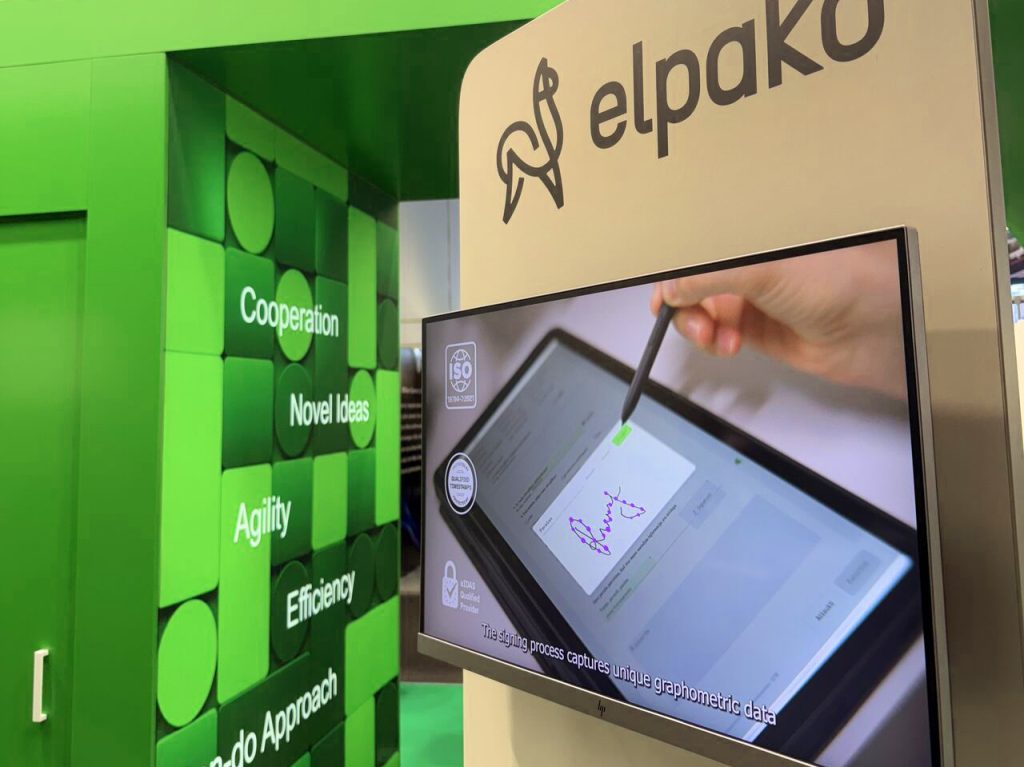
Despite the rise of digital wallets, biometric signatures remain essential in situations where physical identification is still required. As Rokas points out:
- Seventy percent of public services are still provided in person, so a full shift to online signing will take time.
- Not all users will adopt digital wallets, so reliable alternatives are needed.
- Sectors such as healthcare, legal services and government institutions will continue to require physical identity verification.
Until society fully transitions to digital processes, biometric signatures offer a convenient and secure way to sign documents, integrating directly with organizations’ digital systems.
Future Trends and NEVDA Role
MWC25 reinforced that technological transformation is inevitable. Through participation in the Lithuania Co‑create initiative, we had the opportunity to represent Lithuania as an innovation hub that welcomes collaboration and progress in the global market. Companies that adapt to changes in AI, 5G and digital identification will gain a clear competitive advantage. NEVDA and Elpako aim not only to complement the emerging digital identity ecosystem, but also to strengthen it.
“Our goal is to ensure these innovations become real tools that help both businesses and the public sector work more effectively,” Rokas concluded.
Success at the Pitch2Pitch Competition
In addition to participating in the exhibition, the NEVDA and Elpako team had the honor of presenting at the Pitch2Pitch competition, an event that gives innovative solutions international visibility. Among many participants, we reached the final four, further confirming that our technology has significant potential on the global stage.
NEVDA and Elpako’s participation at MWC25 in Barcelona not only strengthened our position internationally, but also provided valuable insights into how to advance digitalization solutions that meet the needs of both Lithuanian and European markets.